Systems that show their work.
Matthew Thompson, Director of Enterprise Architecture at CardWorks. Eighteen years in regulated industries: seven under the FDA, eleven in banking and consumer finance. Deep experience in data, cloud architecture, governance, and automation.
CardWorks, Citi, M&T Bank, and Johnson & Johnson. MS in Information Science, University at Albany. Author of terrane and chalktalk on PyPI.
I live in Buffalo. That lighthouse is the Buffalo Main Light, built in 1833 at the mouth of the Buffalo River. The sky behind it is Buffalo's weather right now.
Each star on the chart is a skill from my work. Hover or tap one.
Whatever the work, I build it from parts that can be reused and automated.
I've always approached my work the same way: build something once, make it reusable, and automate what I can.
That started at Johnson & Johnson, where I wrote medical device documentation in structured XML so content could be reused across manuals rather than rewritten. At M&T Bank, I applied the same thinking to stress-test model documentation, keeping it alongside the Python code it described.
Those ten years working under FDA and Federal Reserve scrutiny also shaped how I think about risk, governance, and the importance of being able to explain and defend the work.
Problems I have solved:
- Nobody knows where business and technology meet.
- I built an enterprise architecture program from scratch. I dedicated part of my master's studies to building a program that a small team can run. This led to the development of a methodology, Metamodel-Driven Quantitative Architecture; a governance foundation, the Standards Hub; and Terrane, a Python package I built to encourage modular architecture design, mapping, and diagramming.
- Examiner findings
- At M&T I wrote thousands of pages of CCAR and DFAST model documentation that resolved open findings, kept as single-source documentation within live Python code.
- Skilled people spend their week on manual steps.
- I have automated work in data, quality engineering, enterprise architecture, and business processes. At CardWorks I've saved more than 4,500 hours of recurring manual work with automation, freeing colleagues to spend their time on value-add work instead of spreadsheet hell.
Selected work
I built all of this on my own time. Everything here is live or installable, and where the data is synthetic, the page says so.
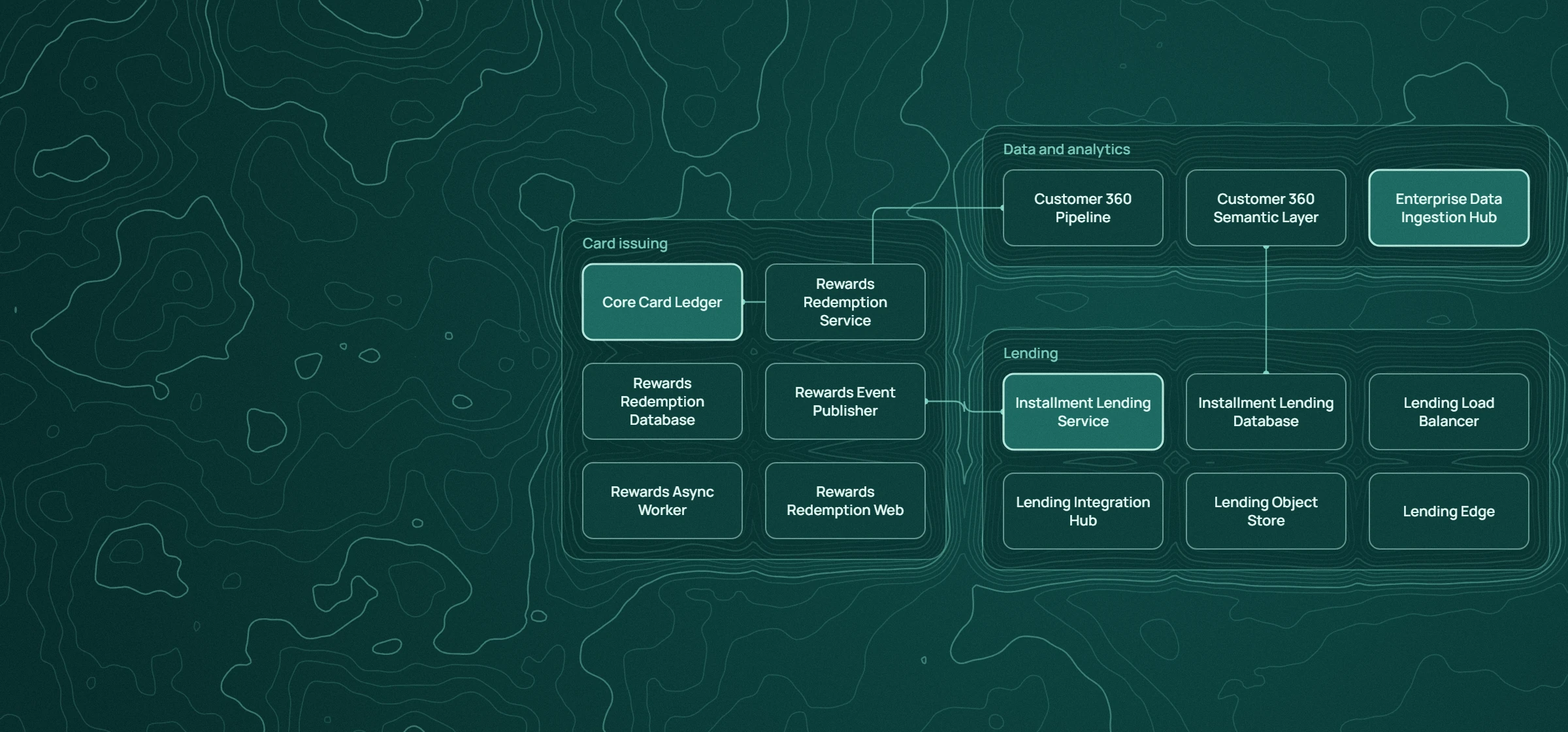
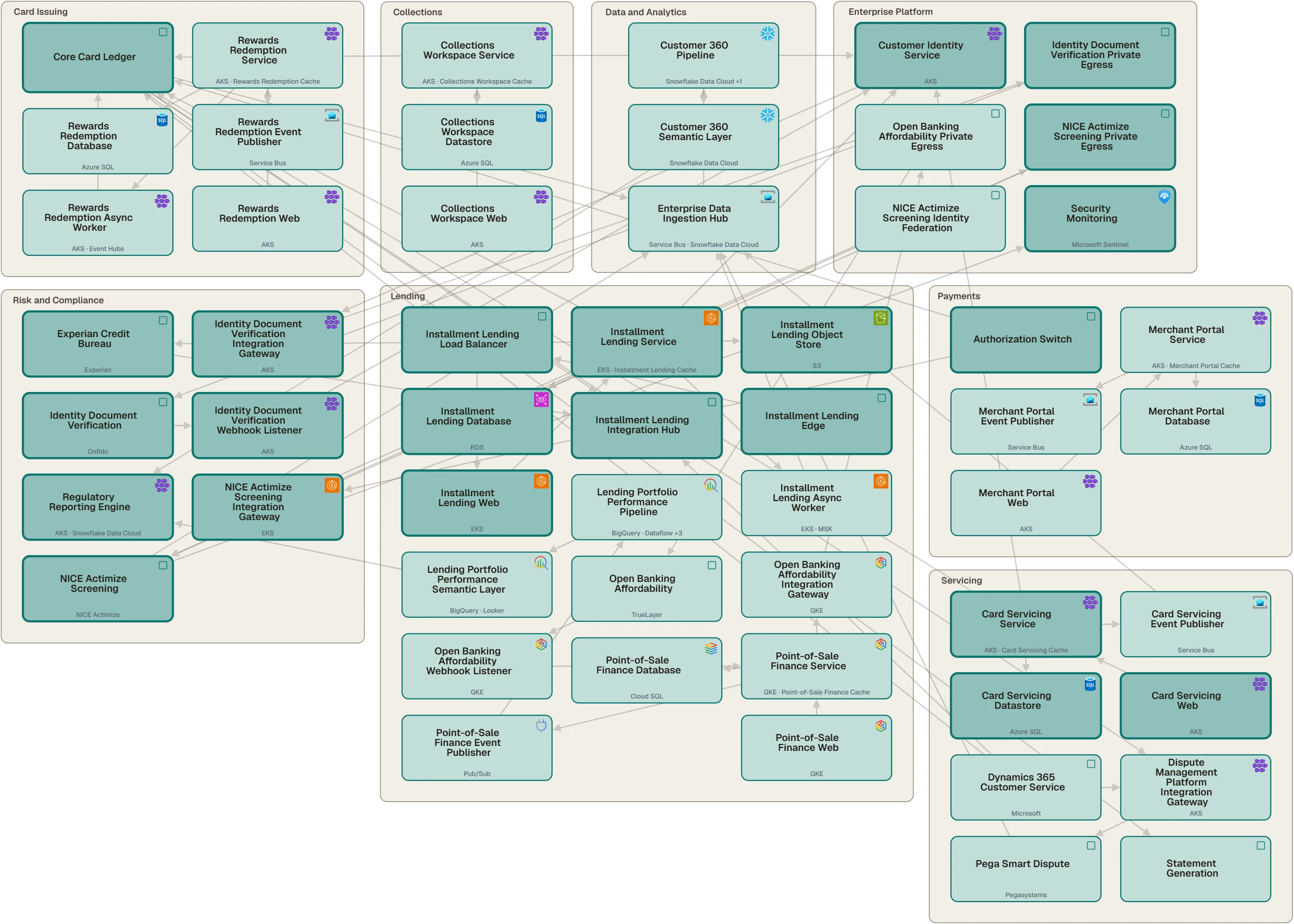
01TerraneArchitecture as code
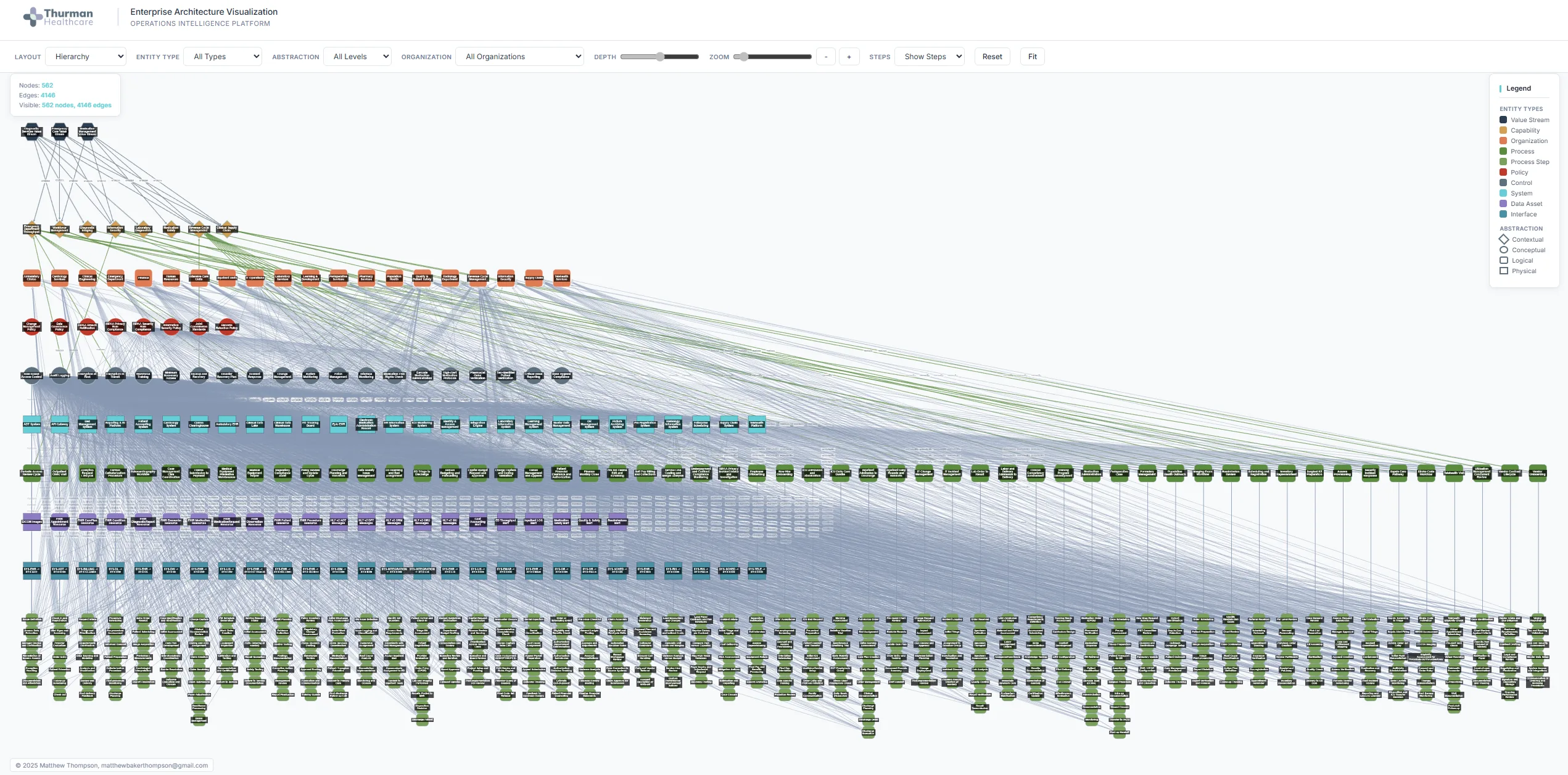
A Python package I wrote that keeps an enterprise architecture in text files and draws the diagrams from them. When a system is added to the files, it appears in every diagram that should include it. It has a browser editor, and it can import draw.io, Visio and Mermaid diagrams or a spreadsheet of systems.
On PyPI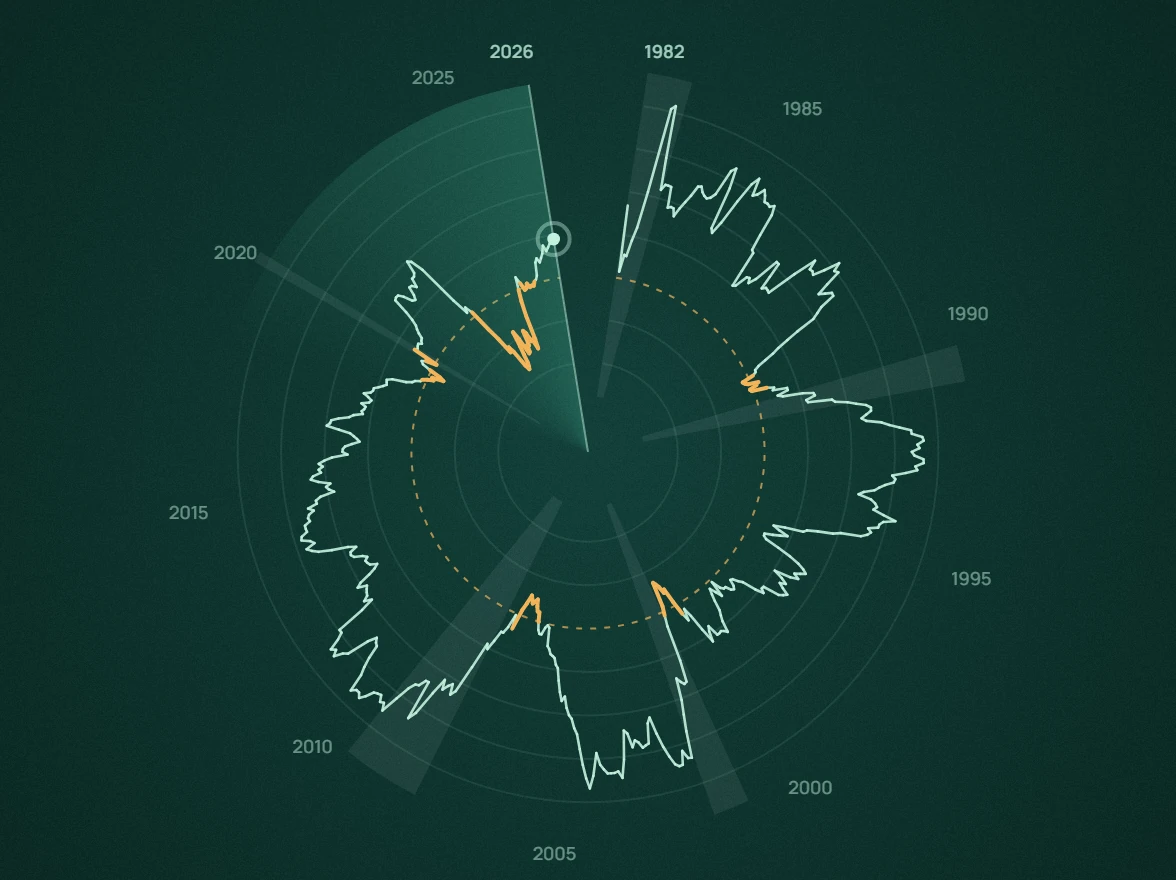
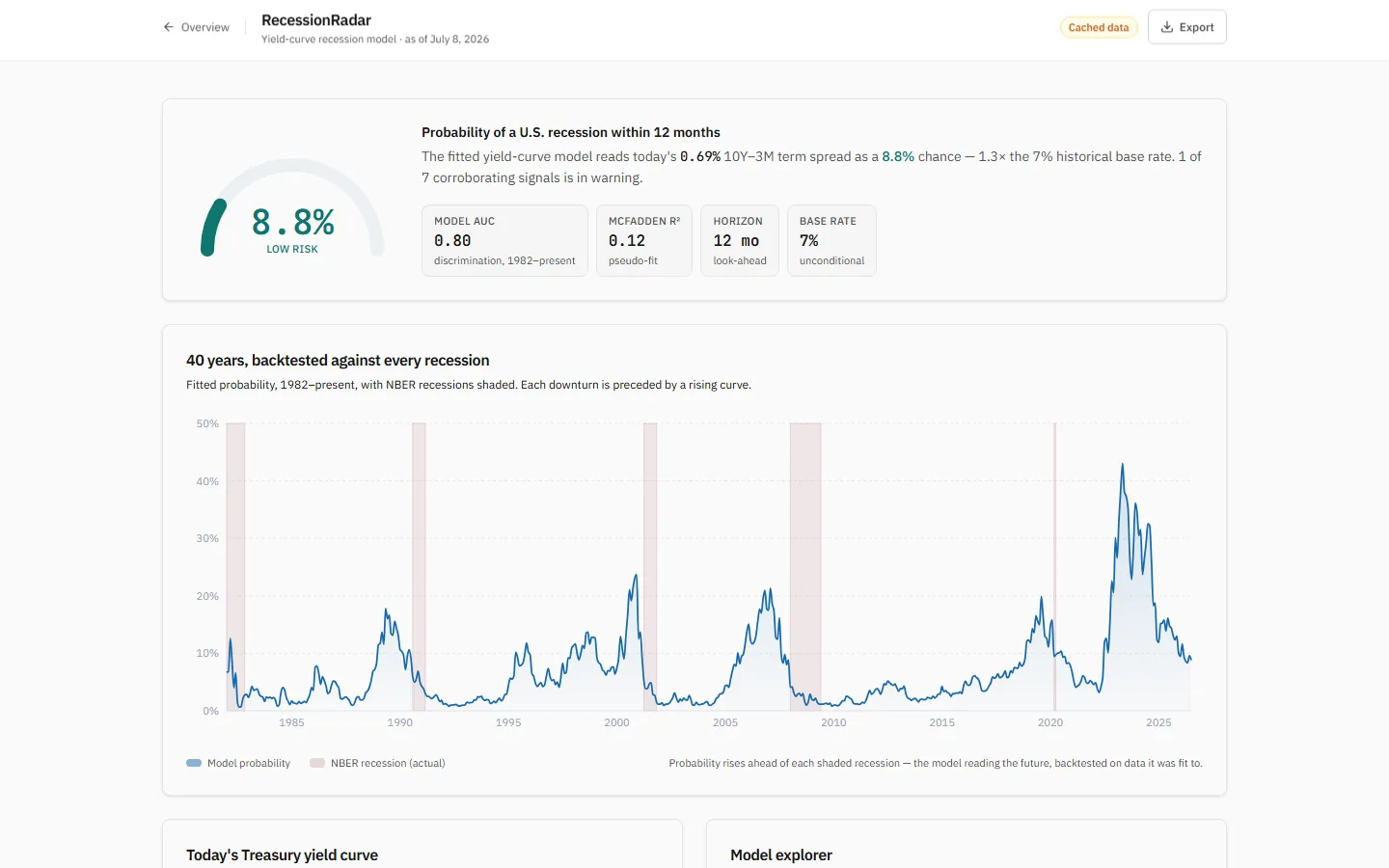
02RecessionRadar
When 10-year Treasury yields fall below 3-month yields, a U.S. recession has usually followed within a year or two. RecessionRadar uses that gap to estimate the chance of a recession in the next 12 months, with a model fit on Federal Reserve data back to 1982. The page shows how it did in each recession since, and where it falls short.
Live model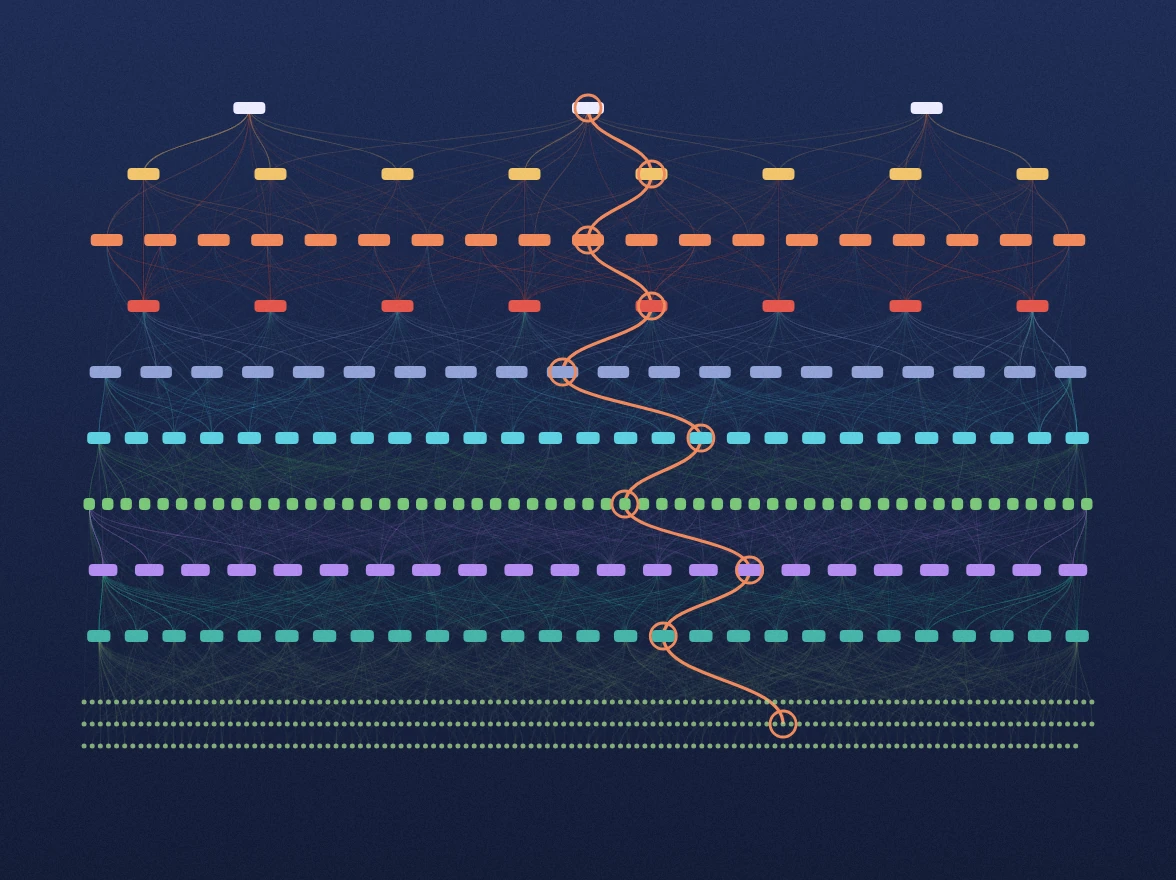
03Metamodel architecture
I built this for a graduate course in health informatics. It describes a fictional hospital's departments, systems and processes as data, then generates the architecture diagrams, BPMN process maps and an operations dashboard from that data.
Case study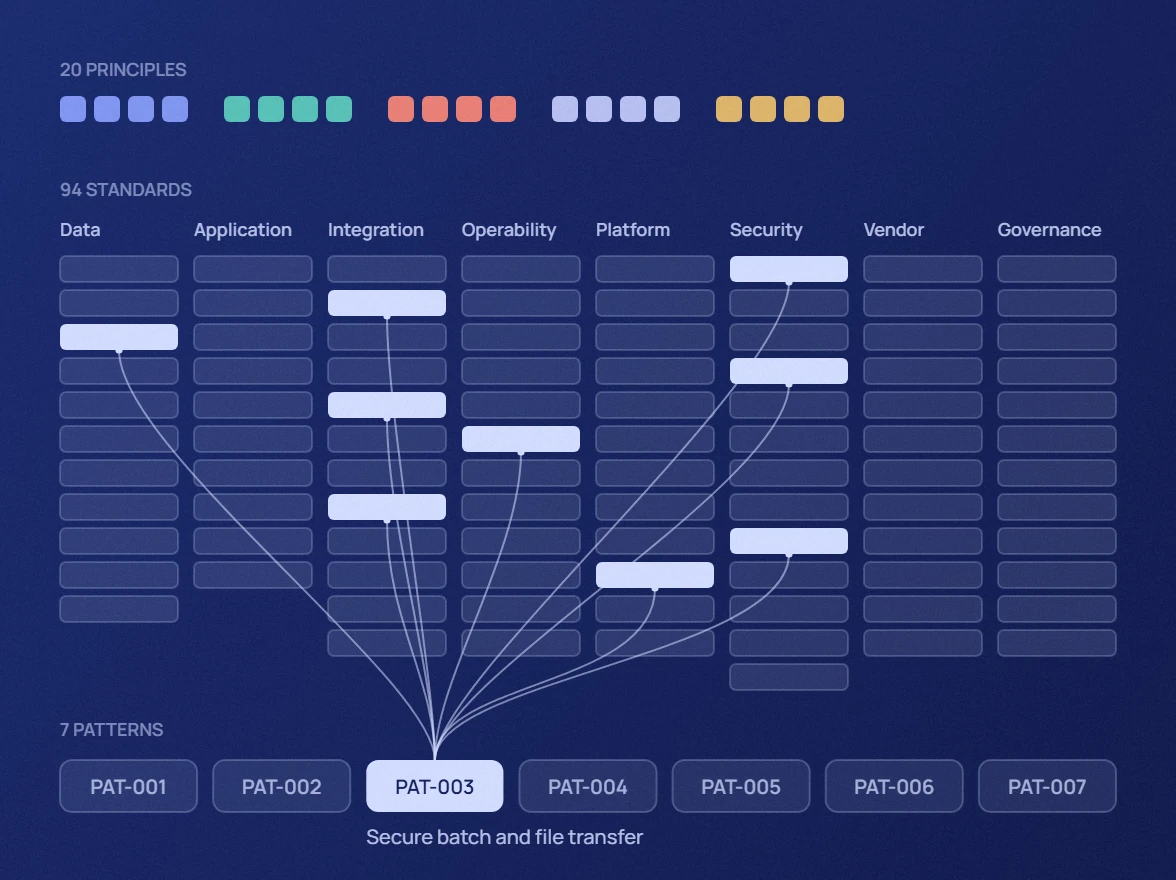
04Standards hub
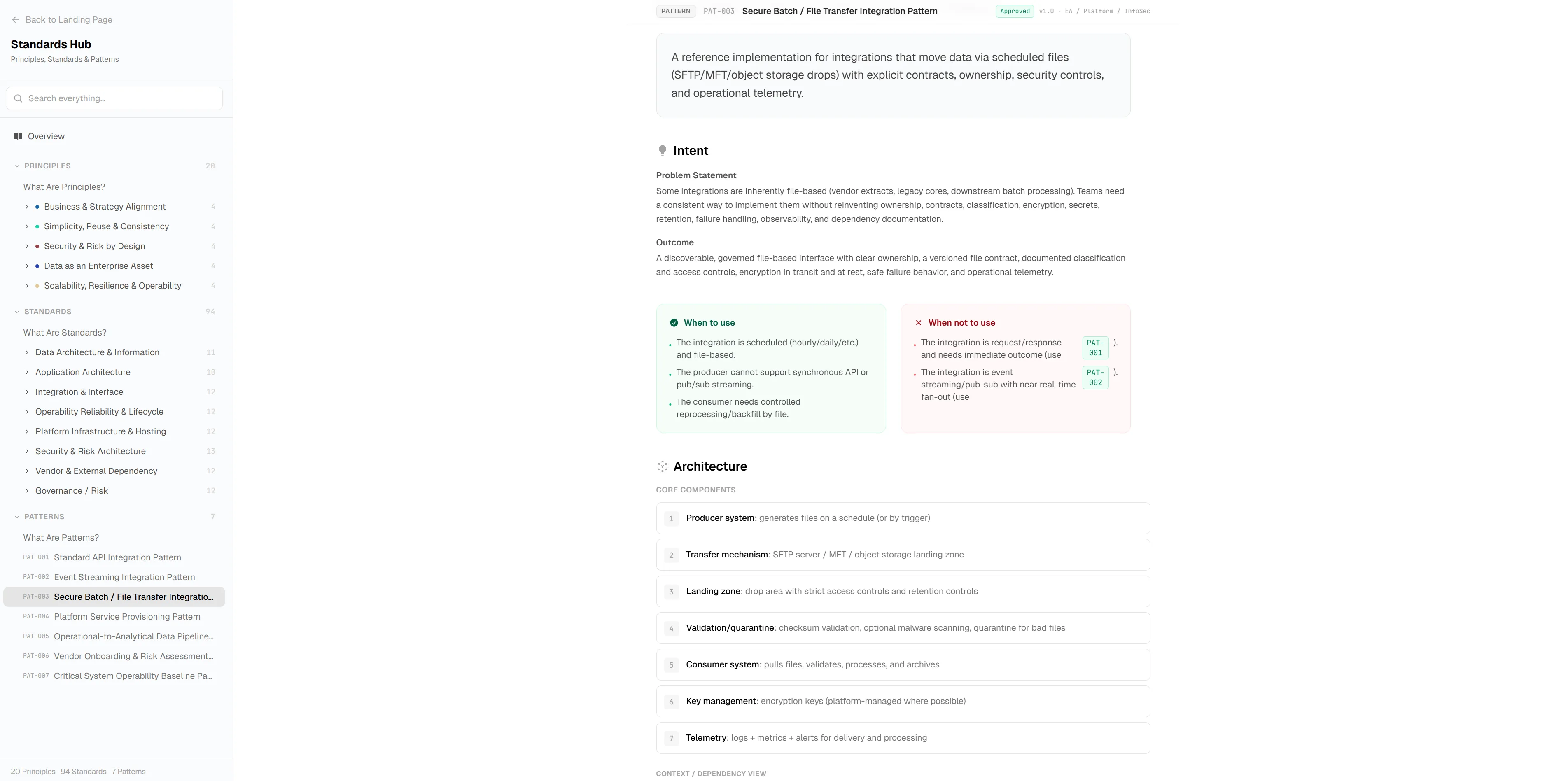
A sample set of architecture principles, standards and integration patterns, written as I would for an architecture review board. Each standard links to the principle it supports and the outside framework it draws on, such as NIST or ISO, and says what a reviewer should check.
Live explorer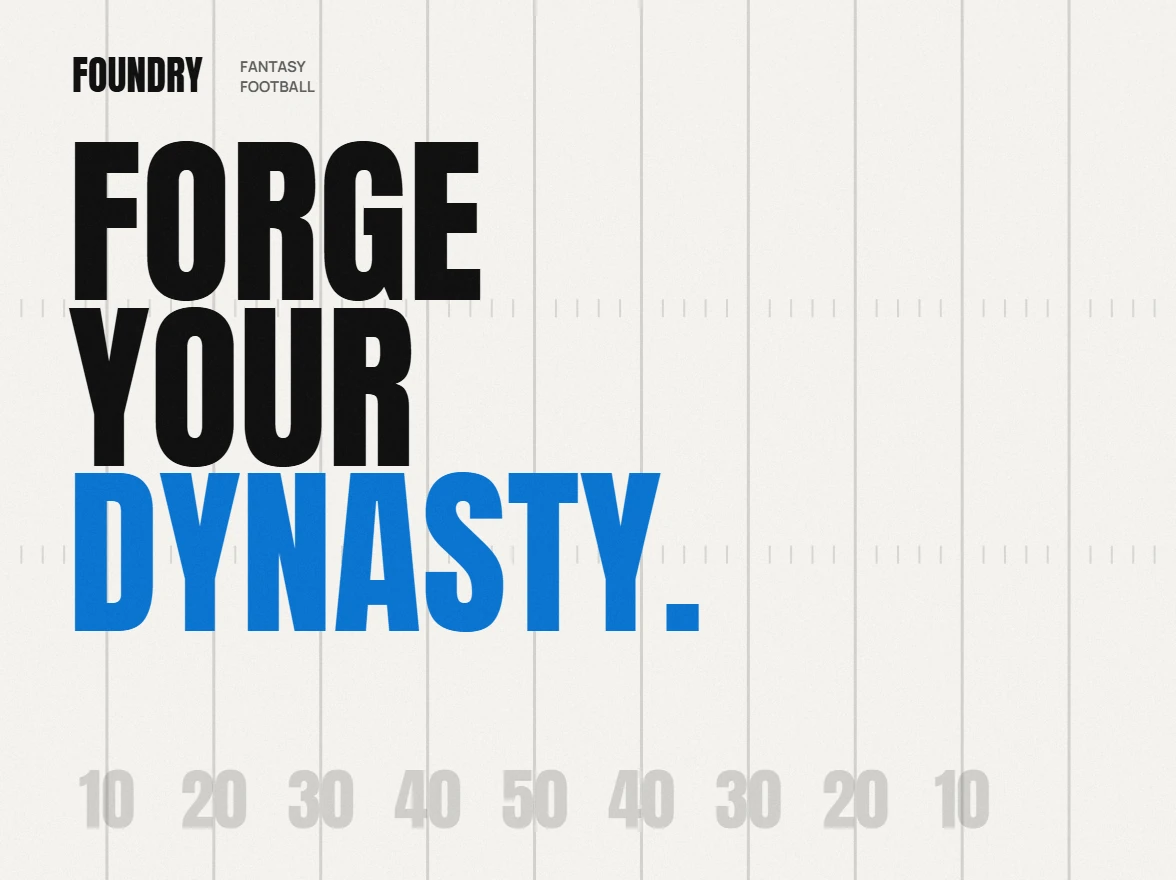
05Fantasy Football Foundry
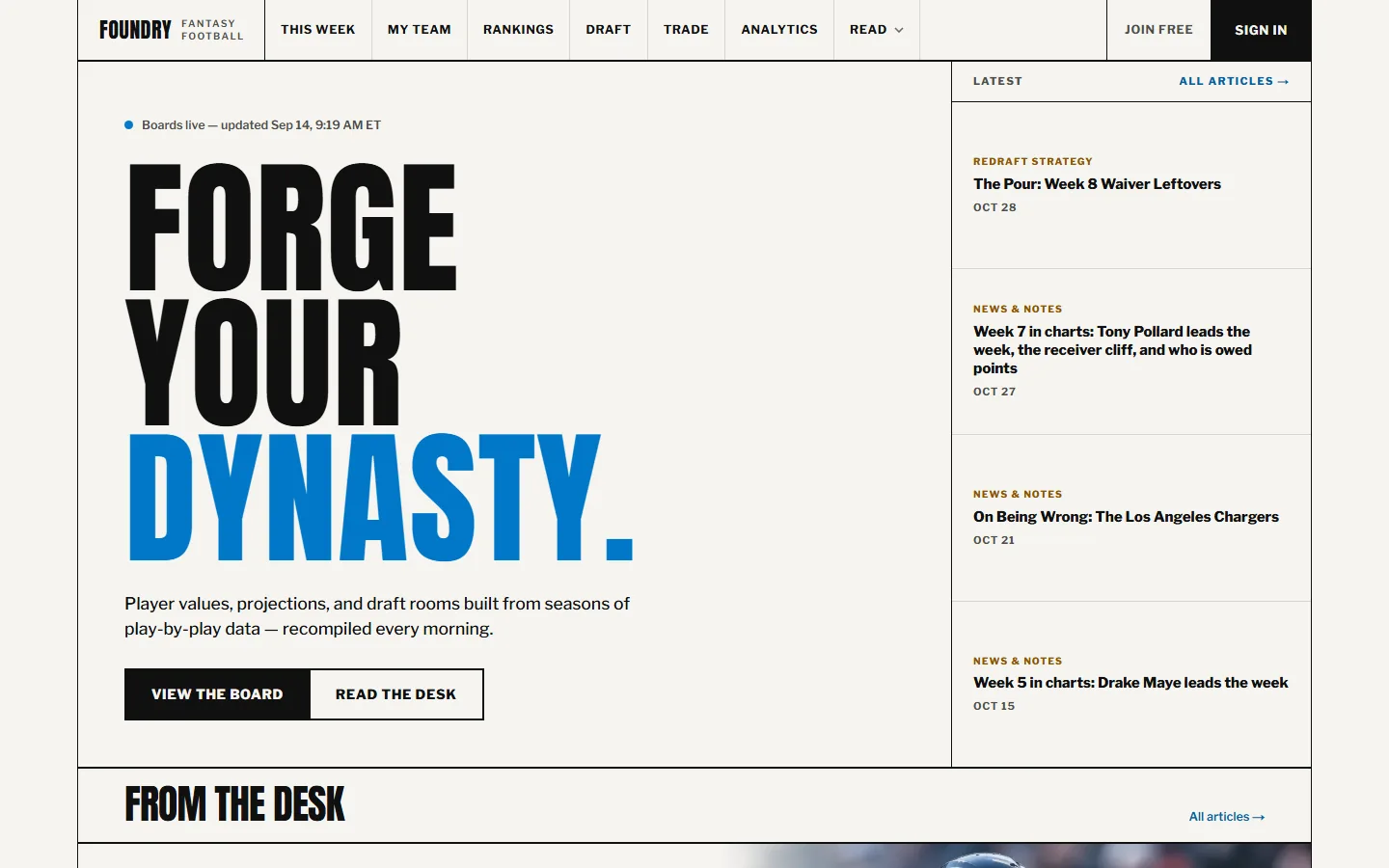
A fantasy football site I built and run myself on AWS. It has rankings, player stats, and draft and trade tools, and it connects to your Sleeper league. Behind it is a data pipeline that rebuilds the models from public NFL data. The site flags numbers that are still experimental.
Live productAnd six more
- 06Enterprise governance portalA portal for policy documents, with approval workflows and a compliance scanner.Live app
- 07Sports revenue modelsPricing, renewal and sponsorship models for a simulated sports team.Live demo
- 08Technology investment case builderA business case calculator for technology projects that exports a one-page PDF summary.Live tool
- 09Economic shock simulatorModels how an economic shock spreads through households, credit and markets, month by month.Open source
- 10NLP policy analyzerClassifies policy documents and flags SOX, NIST and GDPR language.Live demo
- 11chalktalkA Python package for designing football plays and printing playbooks and call sheets.On PyPI
Three threads, one practice
Three threads I have pulled through every role, and each points at work you can open.
-
01
Architecture
I design systems as modules and describe them in models and code, so the map stays current as the systems change.
-
02
Data
I build data pipelines and statistical models, and each model on this site documents its method and where it stops working.
-
03
Governance
I write the standards and documentation that reviews and exams run on, and I design approvals that leave an audit trail.
Career
Writing first, then banking, then the tools.
- Johnson & JohnsonTechnical writer, medical device documentation, through Novatek Communications
Seven years of reference guides, help systems, and error documentation for medical devices in Rochester, written for customers and for FDA audits. Regulatory and audit support under FDA guidelines, with translation and file-conversion management on the side.
- M&T BankTreasury modeling technical writer, banking officer
CCAR and DFAST model documentation that resolved Federal Reserve MRIA findings. Single-source documentation embedded in Python.
- M&T BankTreasury data analyst II, banking officer
Automated the bank's HELOC portfolio analysis end to end. SQL and Power BI reporting and the treasury data lineage strategy.
- CitiLead financial solutions analyst, VP
Executive dashboards and transformation analytics in KNIME, Tableau, and Python.
- CardWorksLead information architect, then manager of data operations and quality engineering, now Director of Enterprise Architecture
Led automation engineers and SDETs, saving more than 4,500 hours of recurring manual work. Now the metamodel-driven architecture platform, enterprise standards, and innovation portfolio governance.
Education and certifications
Both degrees earned alongside the day job.
- MS in Information ScienceAI and Data AnalyticsUniversity at Albany
- BS in InformaticsData AnalyticsUniversity at Albany, summa cum laude
Certifications
Writing
Essays on architecture, process, and governance.
Process debt: the debt we don't track
Tech debt gets budgets and metrics, while the manual steps and workarounds around it get neither. Part one of a series, and an argument for fixing a process before automating it.
Designing living enterprise models: a metamodel-driven approach
Why architecture diagrams go stale, and the case for maintaining the model underneath them instead. The idea came from my first architecture role, where there were too few people to map everything by hand.
Building trustworthy AI: a standards-based approach to corporate governance
How to govern AI with standards an auditor will recognize, such as the NIST AI Risk Management Framework and ISO/IEC 42001, and why it should extend the risk management a company already has instead of starting over.